Some rooms look beautiful the moment you see them—but they could belong to almost anyone.
Everything matches. The furniture is new. The accessories are perfectly arranged. And yet, the room feels more like a display than a home.
A collected home feels different.
It might pair a clean-lined sofa with an old wooden table, a framed family photograph with contemporary art, or a flea-market vase with a simple lamp from a familiar retailer. The pieces may come from different decades and places, but together they feel natural, layered, and personal.
That quality is difficult to buy in one shopping trip because it comes from more than style. It comes from memory, contrast, patience, and thoughtful editing.
But there is an important balance to find. Without a sense of connection, a mix of old, new, and personal pieces can quickly feel visually busy. The goal is not to display everything you own. It is to choose what deserves a place, give it room to be noticed, and create enough harmony for different pieces to belong together.
Learning how to mix new and vintage decor is less about following a strict formula and more about creating relationships between the pieces. Here is how to build that collected feeling without creating clutter.
First, What Does a “Collected Home” Actually Mean?
A collected home looks as though it has developed over time rather than arriving as one complete furniture set.
It includes pieces with different ages, origins, finishes, and stories. Some may be valuable, but many will not be. A handmade bowl, a book discovered while traveling, a chair passed down through the family, or a child’s drawing in a beautiful frame can contribute as much character as a true antique.
The difference between collected and cluttered is not simply the number of objects in the room.
It is the presence of intention.
In a collected room, pieces relate to one another through color, material, shape, scale, or feeling. In a cluttered room, too many things compete for attention at the same time.
You do not need every object to match. You simply need enough visual connection—and enough quiet space—for the room to feel coherent.
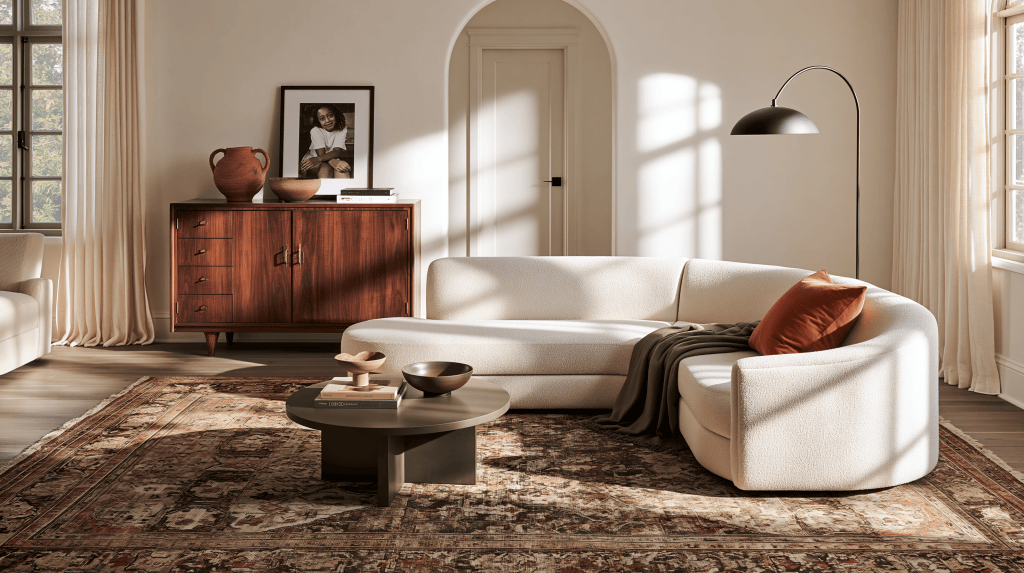
1. Begin With What Already Means Something to You
Before shopping for vintage decor, look at what you already own.
Which pieces would you be genuinely sad to lose?
Perhaps it is a photograph, a small object from your childhood, a textile from your culture, a book you return to often, or something made by a person you love. These objects are the emotional foundation of a collected home.
Do not assume a meaningful piece must be conventionally beautiful to deserve a place. Presentation can change the way it is perceived.
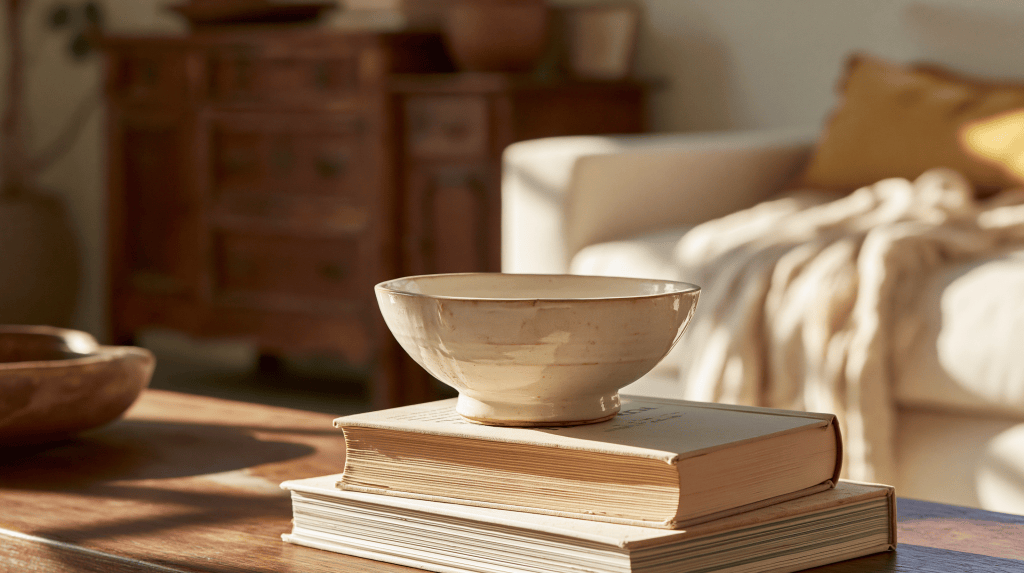
A postcard can be framed with a generous mat. A small inherited object can sit alone on a stack of books. A child’s artwork can be placed in a simple wooden frame instead of being temporarily attached to the refrigerator.
When meaningful objects are treated with care, they begin to feel intentional rather than incidental.
Start with two or three pieces for one room. You can always add more later.
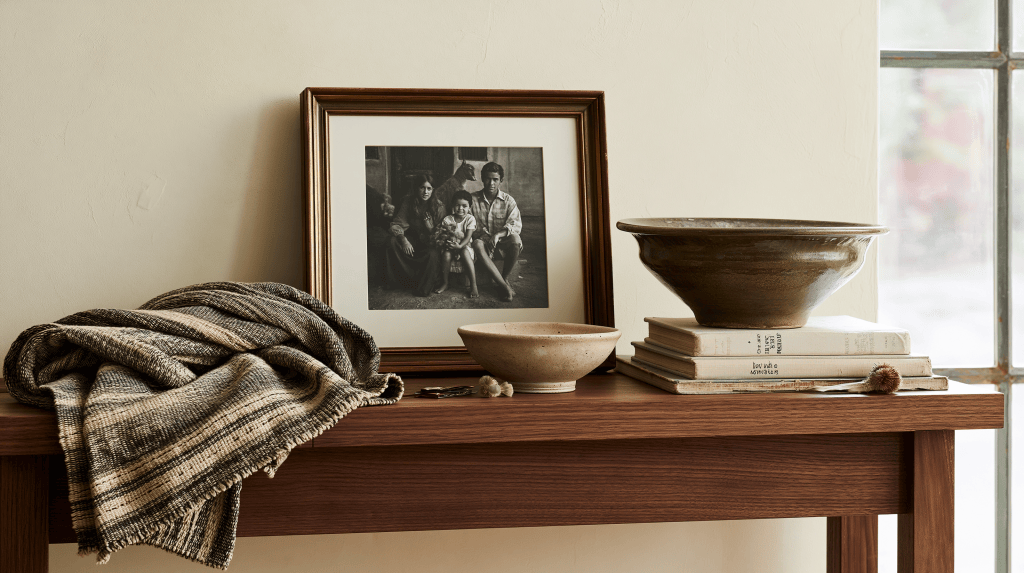
2. Choose One Piece to Lead the Story
Mixing several styles is easier when one piece acts as an anchor.
This could be a vintage dresser, an old rug, a sculptural light fixture, a contemporary sofa, or a large work of art. It does not have to be the most expensive piece in the room. It simply needs enough visual presence to establish a direction.
Then let the other choices respond to it.
For example, if your anchor is a worn wooden dining table, you might surround it with simple modern chairs and a clean pendant light. The table brings warmth and history; the newer pieces keep the room from feeling heavy or overly traditional.
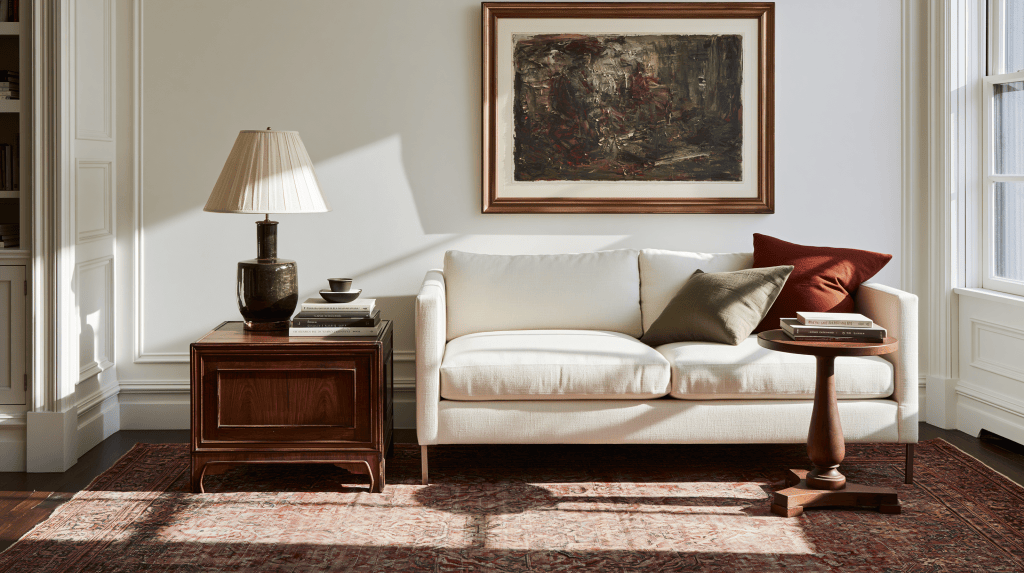
If the anchor is a streamlined modern sofa, an older side table, a handmade textile, and a few weathered objects can soften its newness.
Trying to give every piece equal importance usually creates competition. Let one or two elements lead, while the rest support them.
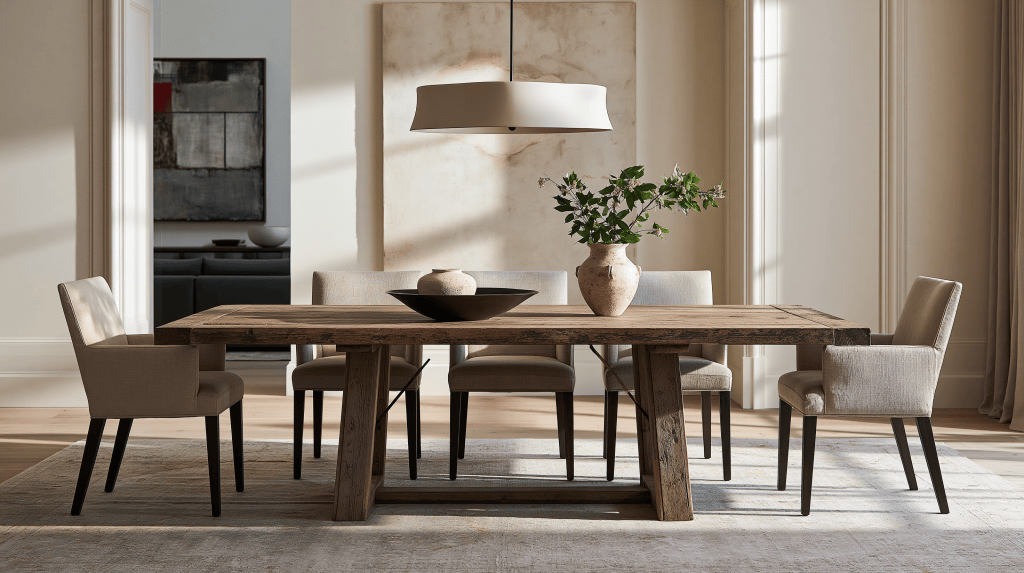
3. Create Contrast—But Repeat Something
The most interesting collected rooms contain contrast: old beside new, smooth beside weathered, refined beside handmade.
But contrast works best when there is also repetition.
Look for one or two details that can travel through the room:
- A wood tone repeated in a frame, a table, and a small bowl
- A dark metal echoed in a lamp, cabinet hardware, and chair legs
- A muted blue appearing in artwork, a pillow, and a book cover
- A curved shape repeated in a mirror, a vase, and the arm of a chair
These repeated elements create a visual thread. They help pieces from different eras feel as though they are part of the same conversation.
The connection does not need to be exact. In fact, slight variation often feels more natural. Woods can be related without being identical, and metals can mix successfully when one finish is dominant and the others appear in smaller amounts.
Aim for coordination, not perfect matching.
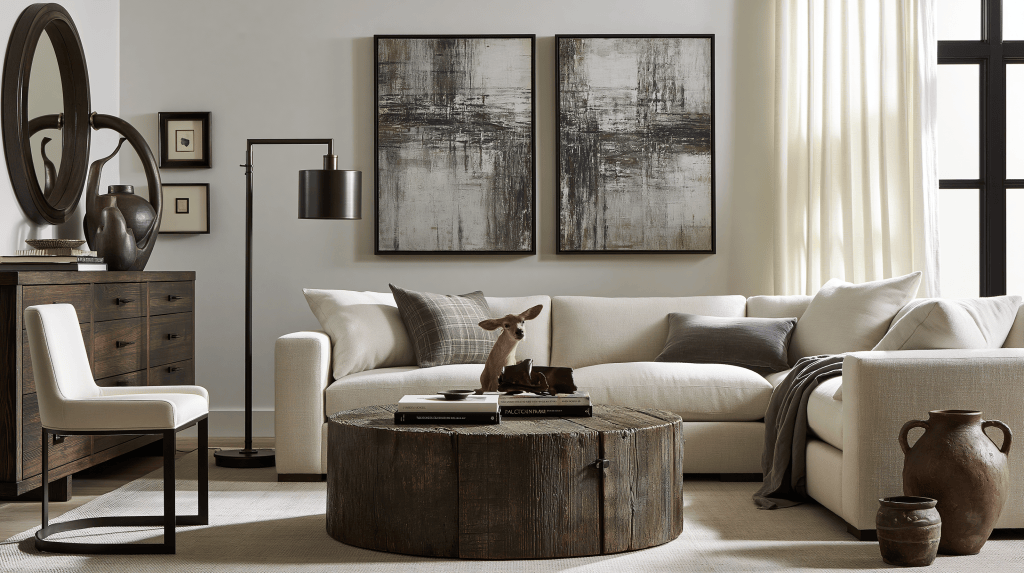
4. Mix Eras Instead of Re-Creating One
A home can begin to feel themed when too many pieces come from the same recognizable period.
One mid-century cabinet can add character. A mid-century cabinet, sofa, coffee table, lamp, clock, and matching accessories may make the room feel like a set.
Unless you intentionally want a period interior, avoid allowing one era to take over completely.
Try pairing:
- A traditional chest with modern artwork
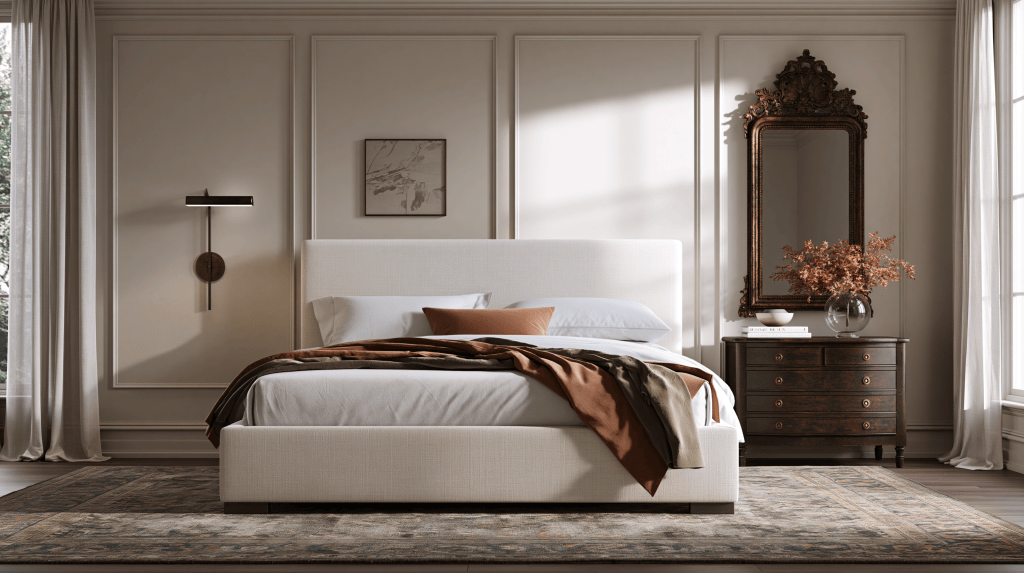
- A contemporary bed with vintage nightstands
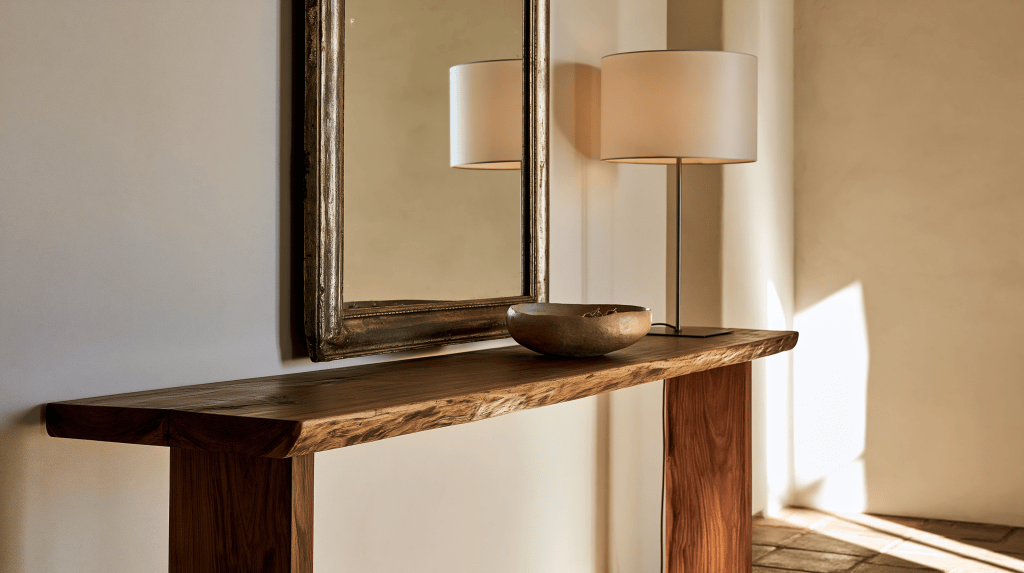
- An antique mirror above a simple console
- A rustic table with tailored upholstered chairs
- A classic armchair beside a minimal floor lamp
The difference in age creates tension, and that tension gives the room energy.
You can also use newer pieces to make vintage ones more practical. A new sofa may give you the comfort and durability you need, while smaller vintage pieces—such as a stool, mirror, side table, or lamp—bring individuality without requiring the entire room to function like an old home.
5. Vary the Scale of What You Display
Clutter often comes from having too many small objects spread across too many surfaces.
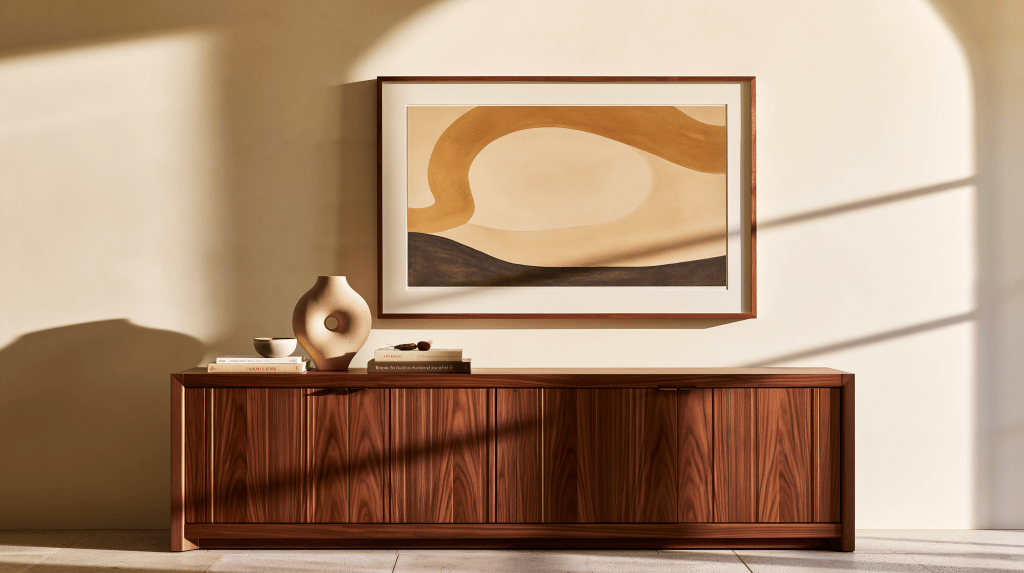
Ten tiny accessories rarely create the same impact as one substantial vase, a sculptural bowl, or a well-framed piece of art.
When everything is small, the eye has to work harder to understand the room. A mix of large, medium, and small pieces creates a clearer visual hierarchy.
On a console, for example, you might use:
- One larger lamp or artwork
- One medium object with an interesting shape
- One small personal item
That is often enough.
The larger piece gives the arrangement structure. The smaller objects add detail without taking over.
Before adding another accessory, ask whether the surface needs more interest—or whether it simply needs one stronger piece.
6. Group Meaningful Objects Instead of Scattering Them
A collection feels more intentional when it has boundaries.
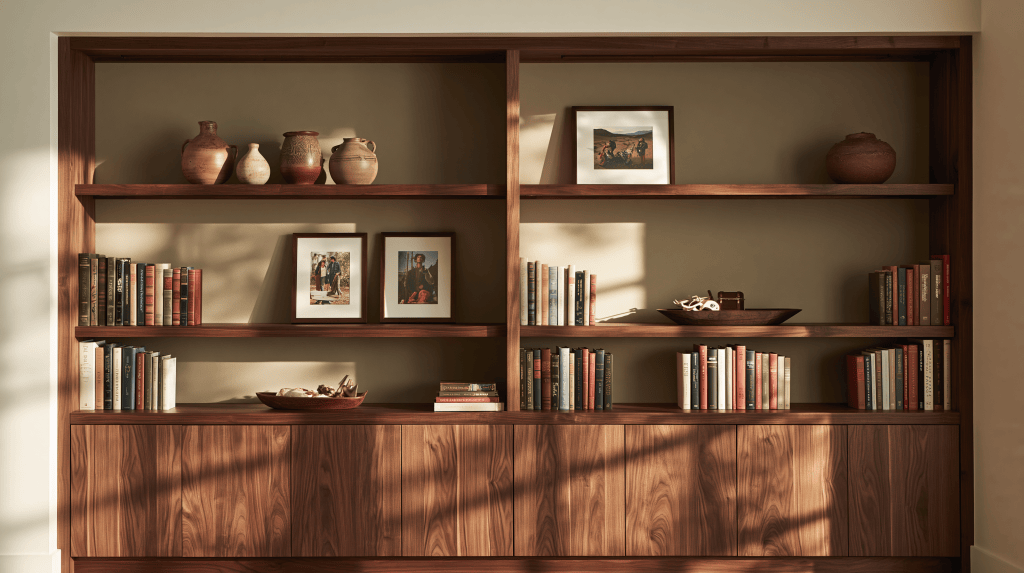
Instead of placing small keepsakes on every shelf and table, bring related pieces together in one area. Photographs might share a single shelf. Travel objects could live on one tray. A group of small ceramics may feel calmer inside a cabinet or arranged together rather than distributed throughout the room.
Grouping gives the eye one complete moment to read.
It also allows the rest of the room to stay quieter.
You do not need to display an entire collection at once. Choose the pieces that tell the story most clearly, store the rest safely, and rotate them when you want the room to feel refreshed.
Rotation is especially useful for sentimental objects. Putting something away does not make it less meaningful. It can actually make you notice and appreciate it again when it returns.
7. Let Some Surfaces Stay Quiet
Negative space is one of the most important ingredients in a collected home.
An old object becomes more noticeable when it is not surrounded by six other objects. Artwork feels more important when every section of the wall is not filled. A beautiful table can be appreciated when part of its surface remains visible.
This does not mean the room has to become minimal. It means the eye needs places to pause.
As you style the room, look for a rhythm between visual activity and rest. If one bookcase is richly layered, keep the nearby wall simple. If a gallery wall is the focal point, the console beneath it may need only a lamp and one object. If your coffee table holds a few favorite books and a bowl, another decorative cluster may be unnecessary.
Empty space is not wasted space. It is what allows the pieces you love to have presence.
8. Pay Attention to Condition, Not Perfection
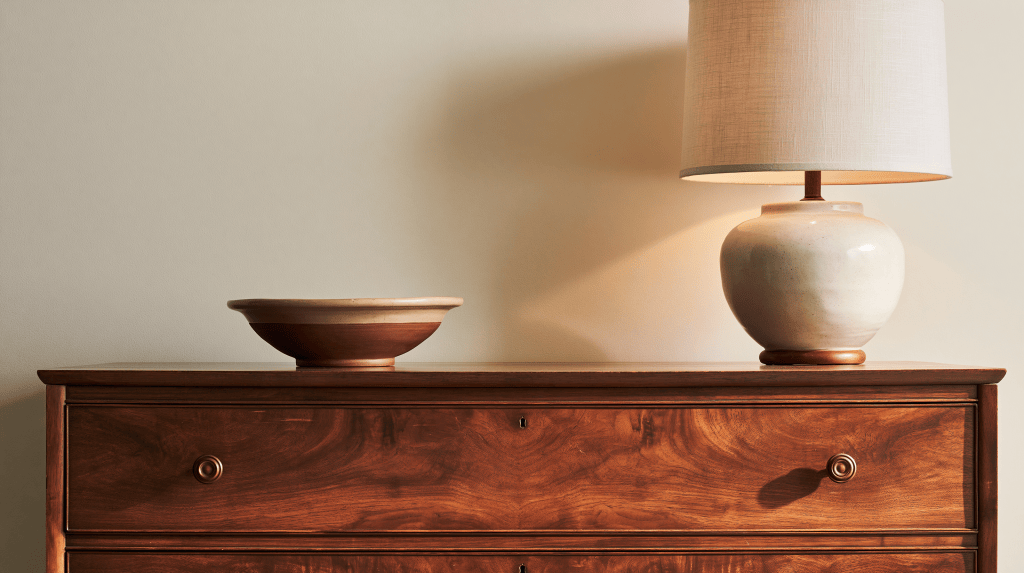
Vintage pieces bring signs of age: faded color, softened edges, small scratches, or an uneven finish. These details often create the warmth that newer rooms lack.
But there is a difference between patina and neglect.
A piece does not need to look new, but it should feel clean, stable, and cared for. Repair a loose leg. Clean the hardware. Replace unsafe wiring. Add felt pads where needed. If a damaged finish distracts from the beauty of the piece, consider whether it should be restored.
At the same time, resist refinishing every sign of age. A little wear tells the truth about an object’s life and creates contrast beside newer, smoother surfaces.
The goal is not perfection. It is a home in which age feels intentional and usable.
9. Edit the Display, Not the Meaning
This may be the hardest part.
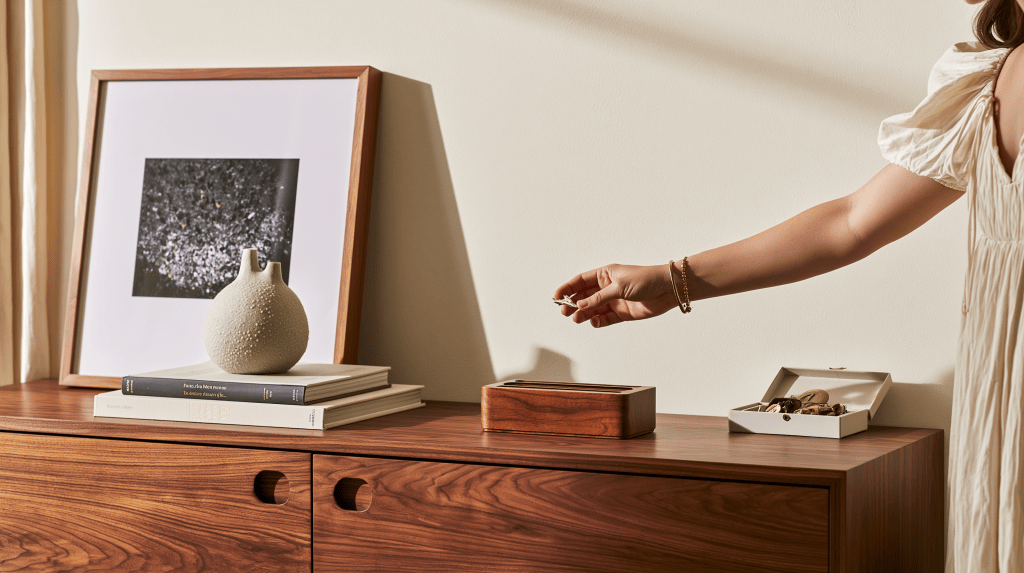
You can love an object and still decide that it does not need to be displayed in a particular room—or displayed right now. Editing what is visible does not change what the object means to you.
When the room begins to feel crowded, remove a few things before rearranging everything. Photograph the room, then look at the image. A photograph often makes visual competition easier to see.
Ask yourself:
- What do I notice first?
- Is that what I want to notice first?
- Are several pieces doing the same job?
- Is there a color, material, or shape that appears only once and feels disconnected?
- Would one larger piece be stronger than several smaller ones?
- Is every object adding beauty, meaning, or function?
Move anything uncertain to another room or into temporary storage for a week. If the room feels calmer and you do not miss the object, that is useful information.
Editing does not erase personality. It makes personality easier to see.
10. Allow the Room to Remain Unfinished
A collected home is never truly completed in one weekend.
That is part of its appeal.
Leaving an empty wall or an unfilled corner can feel uncomfortable, especially when we are used to instant makeovers. But waiting protects you from buying a temporary object simply because the space is empty.
Let the room develop as you find things that are genuinely useful, beautiful, or meaningful to you.
The right piece might come from a family member, a local market, a trip, an artist you discover later, or a new maker whose work you love. When you leave a little room for the unknown, your home gains a story that cannot be copied from a product list.
A Simple Collected-Room Formula
If you are unsure where to begin, try this in one room:
- Choose one anchor. Start with the piece that has the most visual or emotional weight.
- Add one contrast. Pair old with new, straight with curved, polished with worn, or simple with detailed.
- Repeat two elements. Carry a color, material, or shape through at least two other places in the room.
- Create one personal moment. Display a photograph, artwork, book, or object that tells something true about you.
- Group the small pieces. Give collections a defined shelf, tray, cabinet, or tabletop area.
- Remove one thing. Create breathing room before deciding whether anything else is needed.
Then live with the arrangement for a few days.
A room often tells you what it needs more clearly after you stop actively working on it.
The Goal Is Not a Perfectly Styled Home
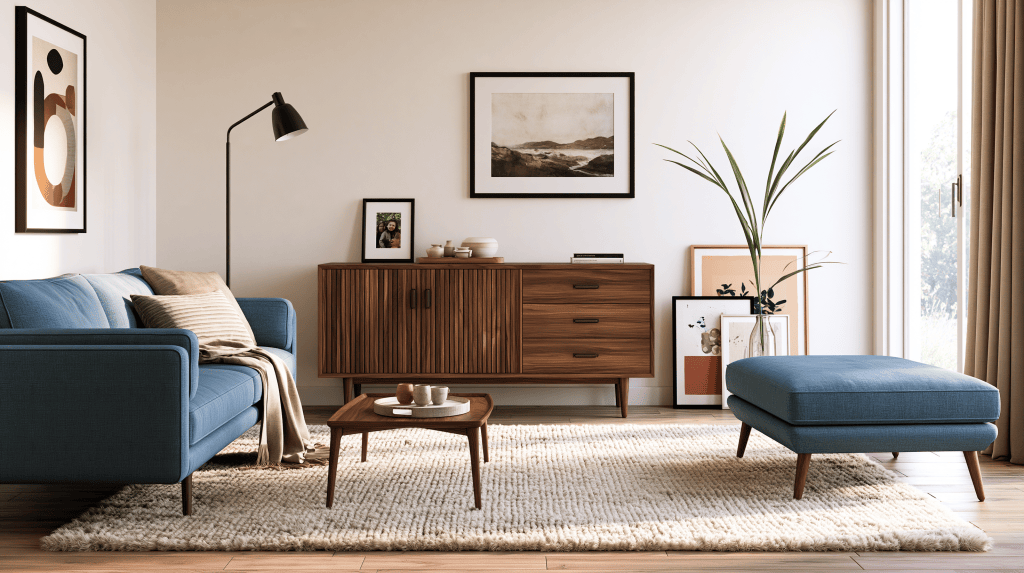
The most memorable homes are rarely the ones in which every object matches.
They are the ones that reveal something about the people who live there: where they have been, what they value, what they have kept, and what they are still becoming.
New pieces make a home comfortable and functional. Vintage pieces add age, texture, and individuality. Meaningful objects give it emotional depth.
The art is in allowing all three to coexist without asking all three to compete.
Choose slowly. Create connection. Leave room around what matters.
Your home does not need more things to feel collected. It needs the right things—arranged with enough intention that their stories can be seen.
Before buying something new for a room, try this: choose one surface and remove everything from it. Put back only the pieces that feel useful, beautiful, or meaningful—then notice what the empty space allows you to see.
Which piece in your home tells the best story?
 Kareman Interiors
Leave a comment