Why Your Room Feels “Off” — Even When Everything in It Is Beautiful
You can love your sofa.
Love the rug.
Love the artwork, the coffee table, the lamp, and every little object you carefully chose.
And somehow, when you step back and look at the room as a whole, something still doesn’t feel quite right.
Nothing is obviously wrong. The furniture is beautiful. The colors are nice. Maybe you even saved inspiration photos, measured the room, and chose everything thoughtfully.
Yet the space still feels unfinished, awkward, flat, crowded, or simply… off.
This is one of the most frustrating parts of decorating a home, because the problem usually isn’t any one object.
It’s the relationship between the objects.
A well-designed room isn’t just a collection of beautiful things. It’s a composition. Scale, proportion, balance, lighting, color, placement, and negative space all quietly work together to determine how the room feels.
And when one or two of those relationships are off, you often sense it before you can explain it.
So before replacing your furniture or buying another decorative piece, look at the room differently.
Here are the things I would check first.
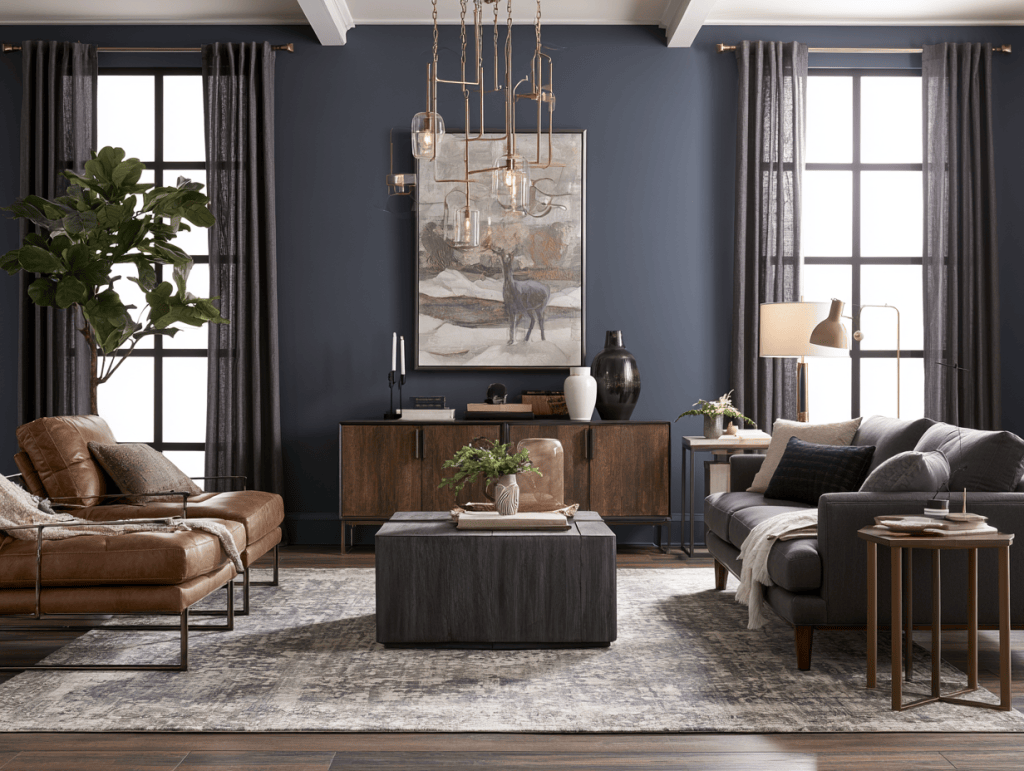
1. The Scale Is Wrong — Even If the Furniture Is Beautiful
Scale is one of those design principles you might not consciously notice when it works.
But you almost always feel it when it doesn’t.
A tiny coffee table floating in front of a substantial sofa can make the seating area feel disconnected.
A small rug surrounded by large furniture can make everything look as though it is drifting around the room instead of belonging together.
A delicate pendant over a large dining table may technically provide light, but visually, the two elements may not feel related.
The opposite can happen too. Oversized furniture squeezed into a small room can make the space feel heavy and difficult to move through.
The goal isn’t simply to choose things that fit.
The pieces need to feel appropriately sized in relation to one another and to the room itself.
Try this:
Stand at the doorway and look at the room as a whole rather than focusing on individual pieces.
Ask yourself:
- Does one piece look unusually small or large?
- Does the rug visually connect the furniture?
- Does the artwork feel substantial enough for the wall beneath it?
- Does the coffee table relate comfortably to the sofa?
- Do the lighting fixtures feel appropriate for the space they occupy?
Sometimes the solution isn’t buying something new.
It might simply be recognizing that the beautiful piece you already own is the wrong scale for where you placed it.
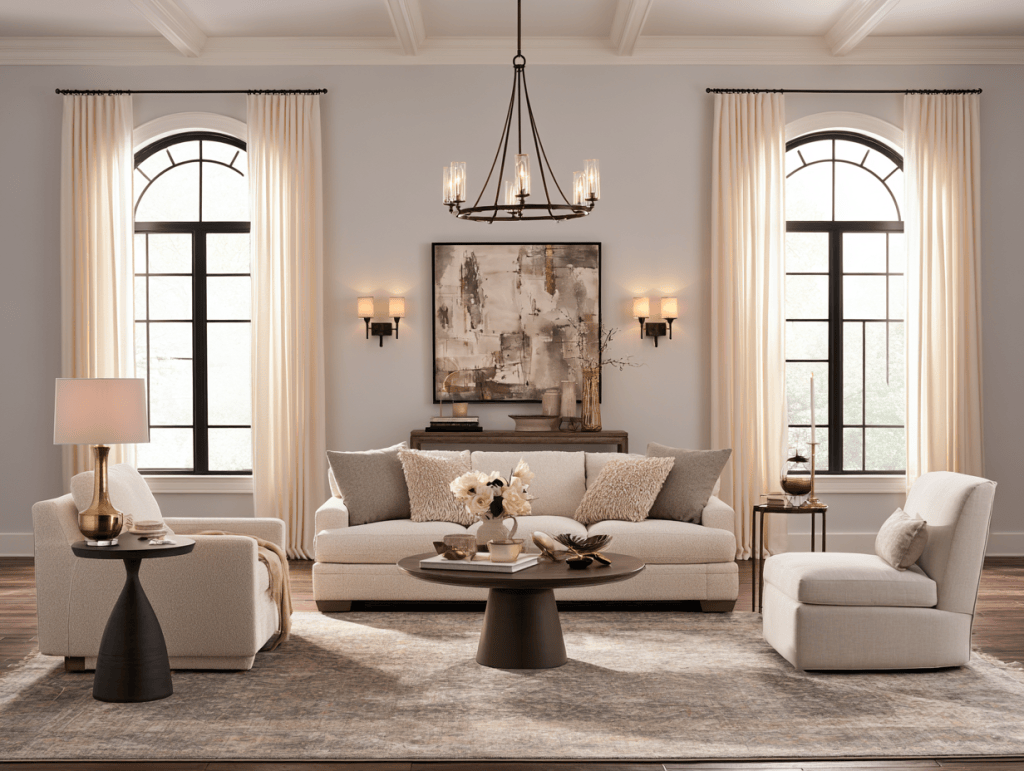
2. Your Furniture Is in the Room — But It Isn’t Creating a Room
Furniture placement has an enormous effect on how a space feels.
One common instinct is to push every piece of furniture against a wall.
That can work in some rooms, especially small ones, but it can also leave a strange empty space in the center while making the furniture feel disconnected from everything around it.
Instead of asking:
“Where can this sofa fit?”
Try asking:
“What relationship should this sofa create?”
Perhaps the sofa and two chairs should form a conversation area.
Maybe the rug should visually contain the entire seating group.
Perhaps an armchair needs to turn slightly toward the sofa rather than facing straight ahead.
Good furniture placement creates invisible connections.
You should be able to look at a group of pieces and understand that they belong together.
And beyond appearance, the layout needs to work for real life.
You should be able to move through the room comfortably without navigating an obstacle course of side tables and chair corners.
A room can be beautiful in a photograph and still be frustrating to live in.
Good design needs both.
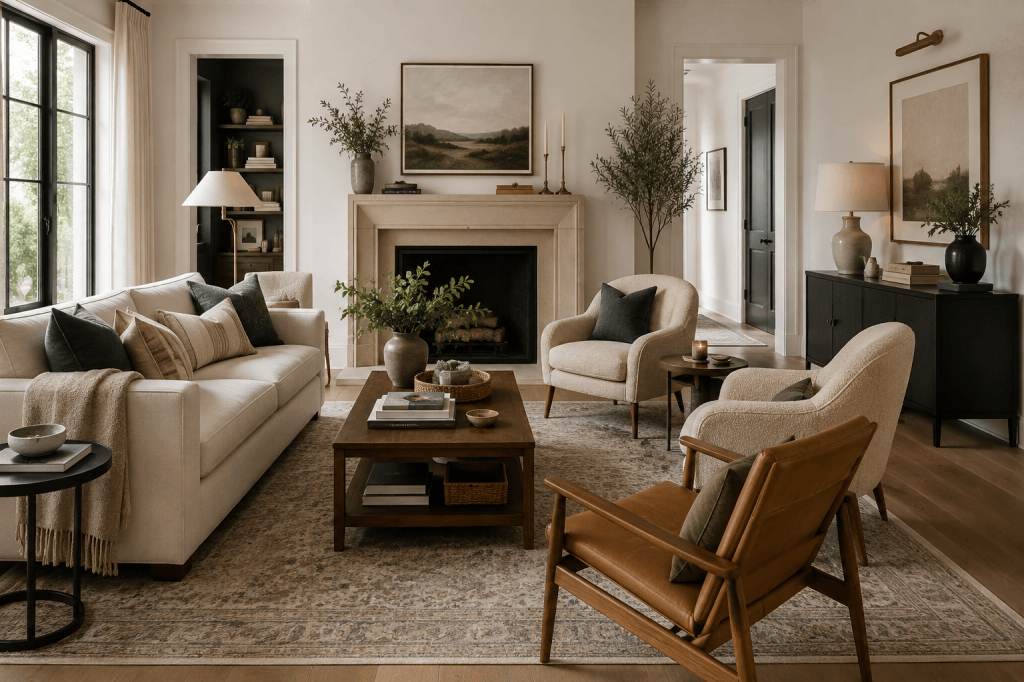
3. Everything Matches — Maybe a Little Too Much
Cohesion is important.
Matching everything is not.
A room where the sofa, rug, curtains, pillows, walls, and accessories are all almost exactly the same shade can technically look coordinated while still feeling strangely flat.
Rooms need relationships, but they also need contrast.
That contrast might come from:
- Light against dark
- Smooth against textured
- Straight lines against curves
- Old pieces beside new ones
- Matte finishes against subtle shine
- Warm materials beside cooler ones
- Large forms balanced by smaller details
Think of contrast as what allows you to actually see the different elements in the room.
Without it, everything begins to blend together.
And contrast doesn’t require dramatic colors.
A quiet neutral interior can have enormous visual depth through wood grain, stone, linen, boucle, metal, plaster, woven fibers, and variations in tone.
The goal is not more decoration.
It is more dimension.
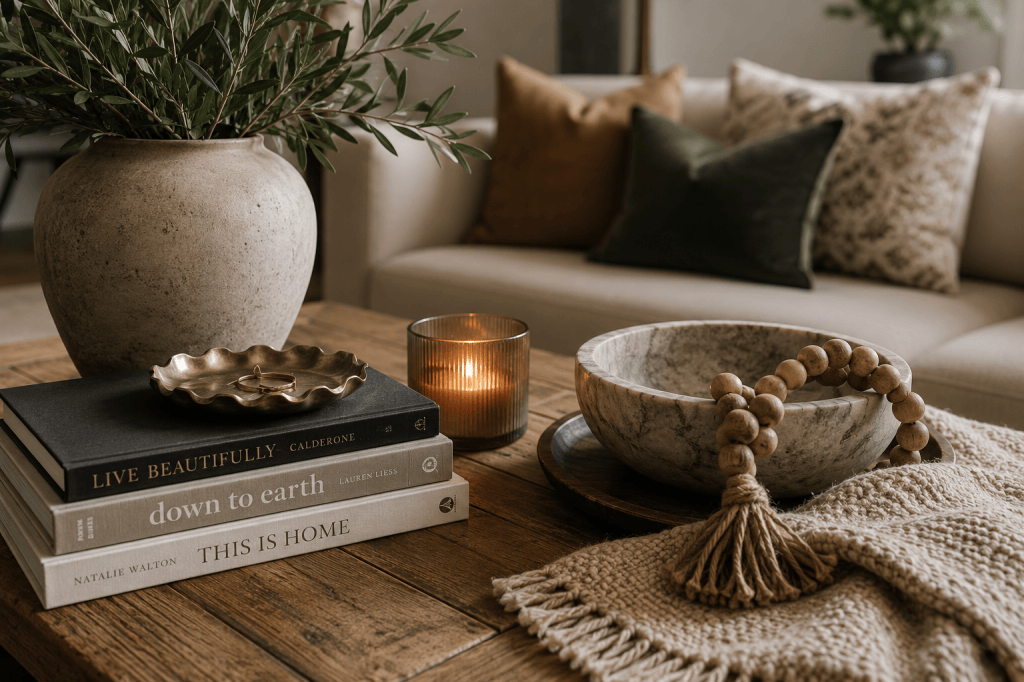
4. Your Colors Aren’t Having a Conversation
Sometimes every color in a room is beautiful individually, but together they feel accidental.
One reason is that there isn’t enough visual repetition.
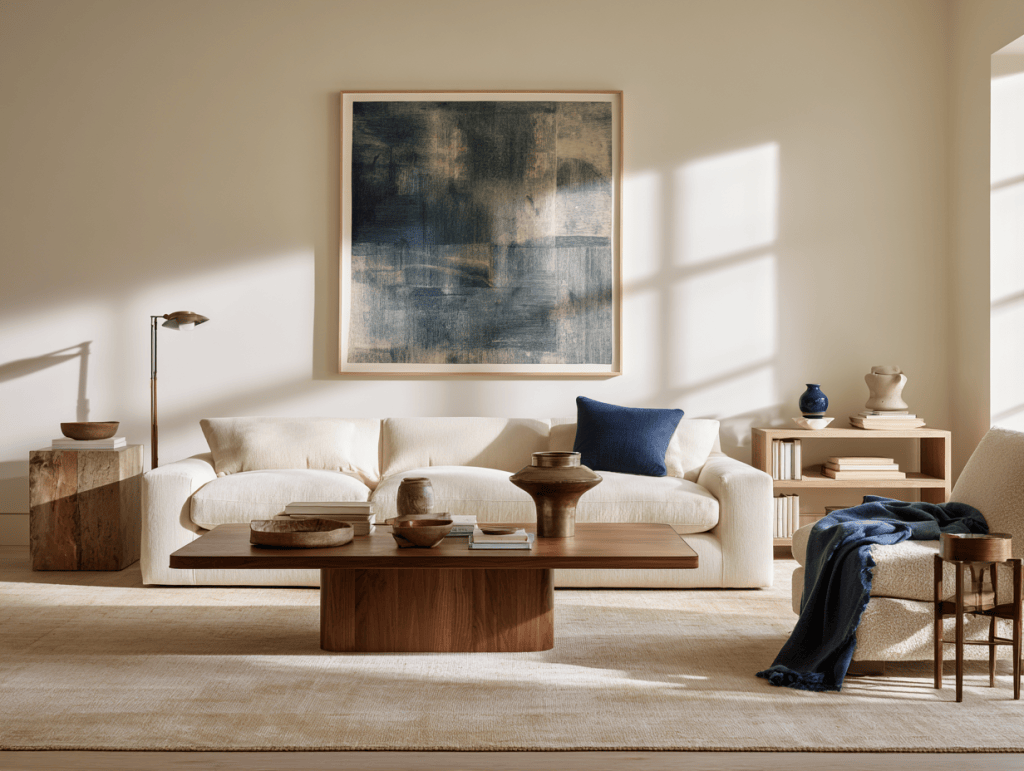
Imagine placing a single blue pillow in an otherwise warm room.
Your eye notices it immediately because nothing else is connecting to it.
But repeat that blue subtly in a piece of artwork, a book on the coffee table, or a small decorative object across the room, and suddenly the color begins to feel intentional.
Repetition creates rhythm.
It tells the eye:
This belongs here.
That doesn’t mean every color needs to appear five times or that your room needs a rigid formula.
Instead, look for subtle echoes.
A warm wood tone might appear in the coffee table, picture frames, and legs of an accent chair.
A soft olive green might repeat in artwork, a pillow, and a plant.
A black detail might move from the lighting fixture to the window frame to a small object on a shelf.
These repetitions quietly tie different parts of the room together.
5. You Have Lighting — But Not Layers of Light
One ceiling fixture can illuminate a room.
That doesn’t necessarily mean it makes the room feel good.
Lighting changes how almost everything else in your space is experienced: color, texture, depth, atmosphere, even how intimate or expansive the room feels.
Most comfortable spaces benefit from more than one type of light.
Think in layers.
There is general lighting, which illuminates the room overall.
There is task lighting, such as a reading lamp or lighting over a work surface.
And there is accent or ambient lighting, which creates atmosphere and can highlight artwork, architecture, or beautiful materials.
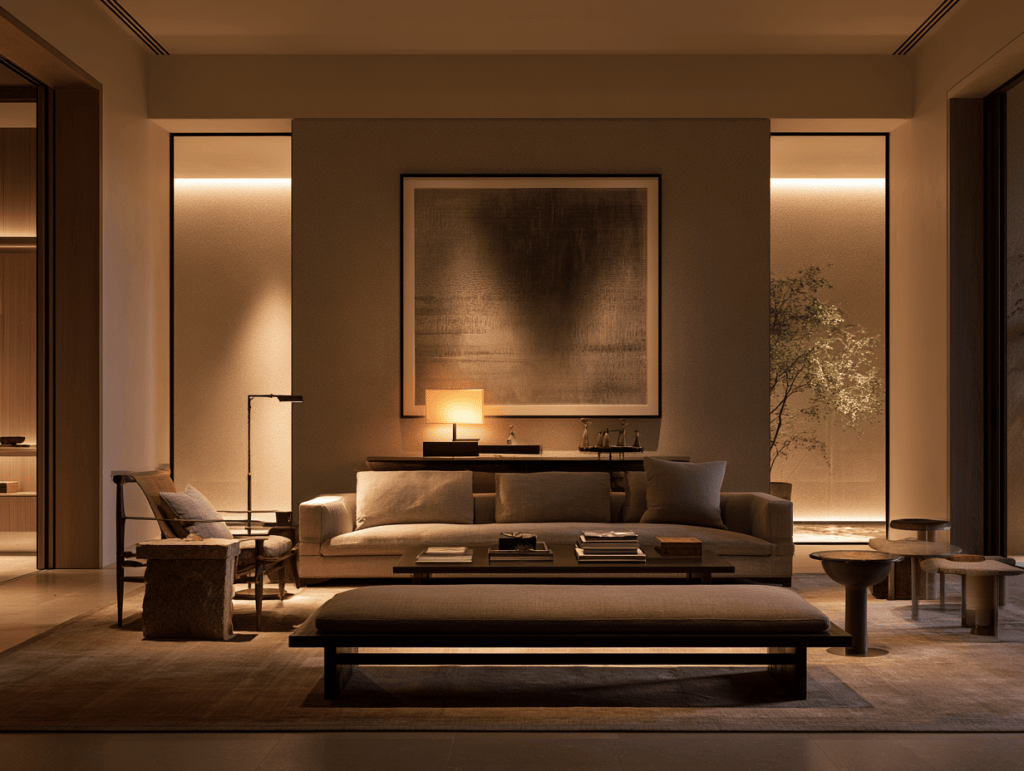
Instead of automatically turning on the brightest ceiling light, imagine the room in the evening with a floor lamp beside the sofa, a smaller table lamp glowing across the room, and softer light illuminating the walls.
The furniture hasn’t changed.
But the room can feel completely different.
That is the power of lighting.
6. The Room Doesn’t Know Where You Want People to Look
Walk into your room and notice where your eye goes first.
If the answer is nowhere in particular, the room may be missing a clear visual hierarchy.
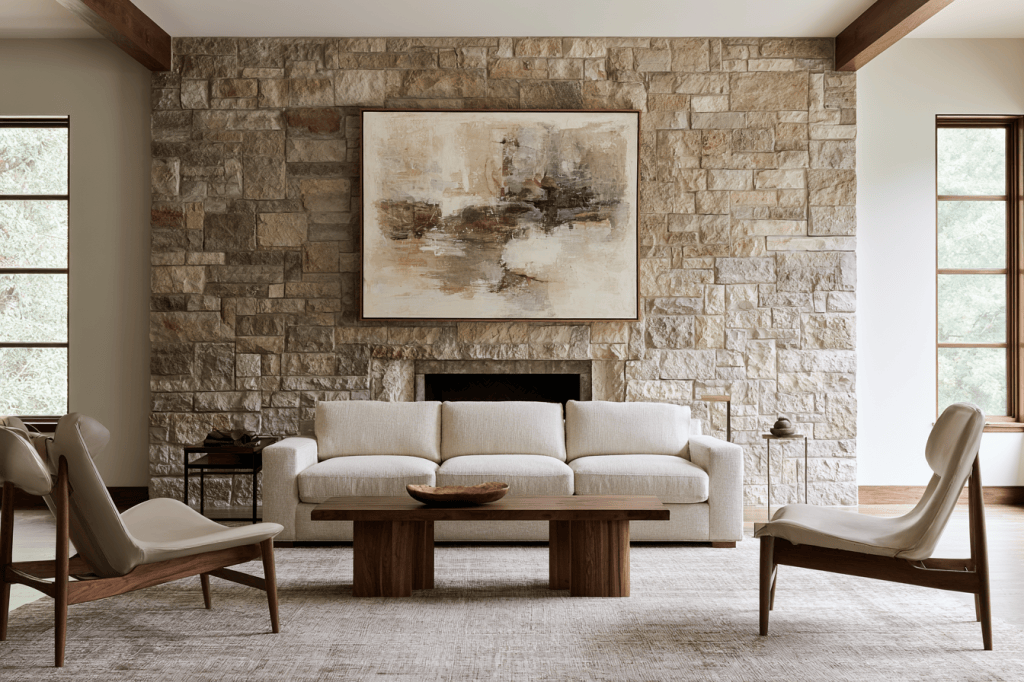
A focal point gives the eye somewhere to land.
Sometimes the architecture gives you one naturally: a fireplace, a beautiful window, a dramatic view, or an architectural feature.
Other times, you create it.
It might be:
- A large piece of artwork
- A sculptural light fixture
- A beautiful bed
- A strong furniture arrangement
- A gallery wall
- A statement material
- A distinctive vintage piece
The important part is not creating something dramatic simply for attention.
The focal point should help organize the room around it.
And not everything should compete with it.
If the artwork, rug, pillows, lighting, shelves, and accessories are all demanding equal attention, the room can start to feel visually noisy.
Some elements should speak.
Others should quietly support them.
7. You May Need to Remove Something, Not Add Something
When a room feels unfinished, our instinct is often:
What should I buy?
Another pillow?
Another vase?
Something for that corner?
More artwork?
Sometimes that’s exactly what the room needs.
But sometimes the better question is:
What can I remove?
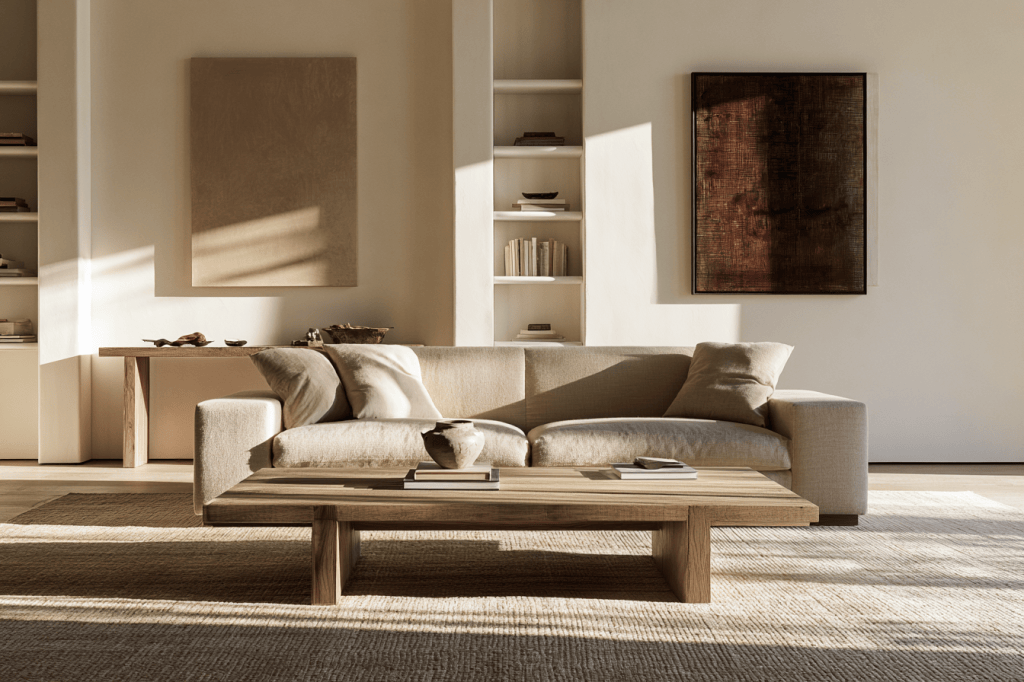
Negative space — the areas where nothing is happening — is part of the design too.
Your eye needs somewhere to rest.
A tabletop doesn’t need something on every inch.
Every wall doesn’t need artwork.
Every corner doesn’t need furniture.
And every shelf doesn’t need to be completely filled.
Editing gives important pieces more presence.
Try removing a few decorative objects from the room temporarily.
Then step back.
You might be surprised by how much calmer and more intentional everything else begins to feel.
8. The Room Looks Good — But It Doesn’t Feel Like You
There is one more possibility that can’t be solved with perfect scale or furniture placement.
The room might simply lack personality.
You can follow every design rule and still create a space that feels more like a showroom than a home.
Beautiful interiors usually have something that makes them specific to the people living there.
Books that have actually been read.
Art that means something.
Objects collected while traveling.
A strange vintage chair someone fell in love with.
Family photographs.
Handmade pieces.
Something inherited.
Something unexpected.
These things don’t always match perfectly.
They don’t need to.
They add another layer that can’t easily be purchased as a complete furniture set: identity.
A beautifully designed room should not only make someone think,
This looks good.
Ideally, it should also make them feel,
Someone lives here.
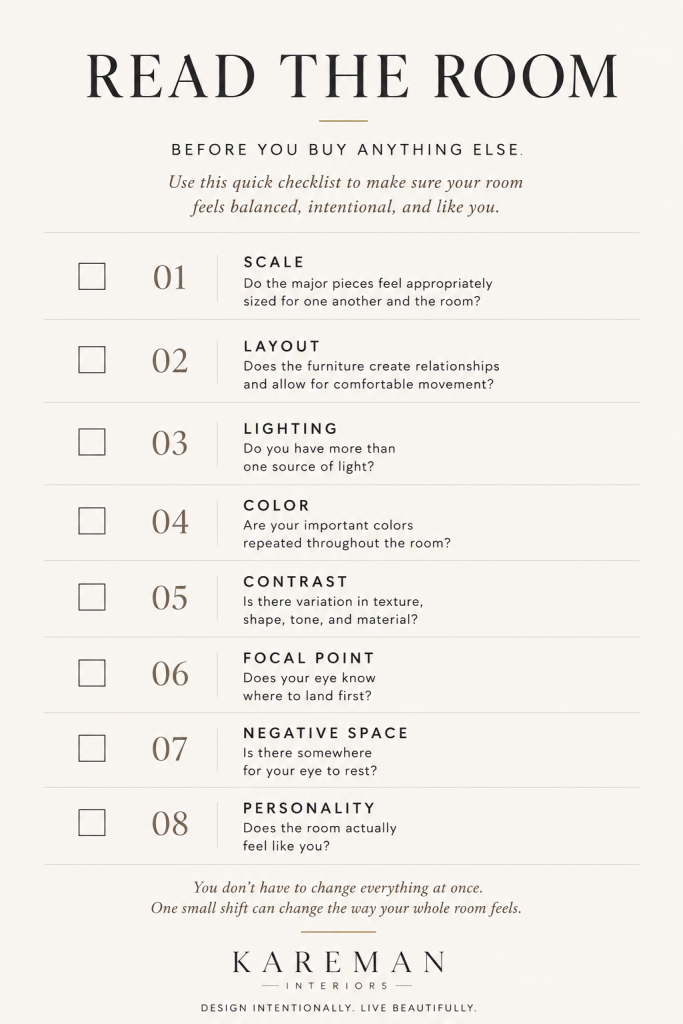
Before You Buy Anything Else, Read the Room
If your room feels off, resist the temptation to immediately start shopping.
Walk into the space and observe it as though you’re seeing it for the first time.
Look at the room from the doorway.
Take a photograph of it. Sometimes seeing your space flattened into an image makes imbalance much easier to notice.
Then ask yourself:
Scale: Do the major pieces feel appropriately sized for one another?
Layout: Does the furniture create relationships and allow comfortable movement?
Lighting: Is there more than one source of light?
Color: Are my important colors repeated somewhere else in the room?
Contrast: Do I have enough variation in texture, shape, tone, and material?
Focal Point: Does my eye know where to go first?
Negative Space: Is there somewhere for my eye to rest?
Personality: Does this room actually feel like the people who live here?
You don’t have to change everything at once.
Often, moving one chair, removing three accessories, changing the position of a lamp, using a larger rug, or repeating a color across the room can solve something you couldn’t quite identify before.
That is one of the most useful lessons in interior design:
A beautiful room isn’t created by collecting beautiful things.
It’s created by understanding how those things relate to one another.
And once you start seeing those relationships, you begin looking at rooms differently.
Not simply as places filled with furniture and decoration —
but as compositions.
 Kareman Interiors
Leave a comment